
Kicking off with Big Rig Accident Lawyers: Proving Vicarious Liability for Logistics Companies, this opening paragraph is designed to captivate and engage the readers, providing an overview of the intricate legal aspects surrounding vicarious liability in big rig accidents involving logistics companies.
Exploring the relationship between vicarious liability and the responsibilities of logistics companies, this discussion delves into key factors influencing vicarious liability claims and the challenges faced in proving such liability.
Understanding Vicarious Liability in Big Rig Accidents
Vicarious liability is a legal concept where one party is held responsible for the actions of another party. In the context of big rig accidents, vicarious liability can be crucial in determining who should be held accountable for the damages caused.Logistics companies often employ big rig drivers to transport goods and materials.
When a big rig driver is involved in an accident while performing their duties, the logistics company may also be held liable for the actions of their employee under vicarious liability.
How Vicarious Liability Applies to Logistics Companies
Logistics companies have a duty to ensure that their employees, especially big rig drivers, are properly trained, licensed, and follow all safety regulations while on the road. If a driver causes an accident due to negligence or recklessness, the logistics company can be held responsible for the damages incurred.
- Logistics companies are responsible for hiring qualified drivers and ensuring they adhere to safety protocols.
- If a driver is found to be at fault in an accident, the logistics company may be deemed vicariously liable for the driver’s actions.
- Failure to properly supervise and train drivers can increase the likelihood of vicarious liability claims against logistics companies.
Examples of Cases Where Vicarious Liability Was Proven for Logistics Companies
One notable case involved a logistics company whose driver caused a serious accident due to fatigue from driving long hours without adequate rest breaks. The court held the logistics company vicariously liable for the accident, emphasizing the company’s responsibility to monitor and enforce driver safety regulations.
In another case, a logistics company was found vicariously liable when their driver caused an accident while texting and driving. Despite the driver’s negligence, the company was held accountable for not implementing policies to prevent distracted driving among their employees.
Factors Influencing Vicarious Liability Claim
When it comes to proving vicarious liability in big rig accidents, several factors play a crucial role in determining the accountability of logistics companies. The employment relationship, actions of employees, and the level of control exerted by the company over the driver are significant factors that influence vicarious liability claims.
Role of Employment Relationship
In vicarious liability claims, the employment relationship between the driver and the logistics company is a key factor. If the driver was operating within the scope of their employment at the time of the accident, the company can be held liable for their actions.
This means that the company may be responsible for any negligence or wrongdoing on the part of the driver while carrying out their duties.
Actions of Employees Leading to Vicarious Liability
The actions of employees can directly impact vicarious liability for the company. If a driver engages in reckless behavior, violates traffic laws, or acts negligently while driving a big rig, the company they work for can be held accountable for any resulting accidents or damages.
It is essential for companies to ensure that their employees adhere to safety regulations and guidelines to minimize the risk of vicarious liability.
Impact of Company Control Over the Driver
The level of control exerted by the company over the driver also plays a significant role in determining vicarious liability. If the company dictates the driver’s schedule, provides specific instructions on how to perform their job, or exercises a high degree of control over the driver’s actions, they are more likely to be held vicariously liable for any accidents or incidents involving the driver.
On the other hand, if the driver has a significant amount of autonomy and independence in their work, the company’s liability may be less clear-cut.Overall, the employment relationship, actions of employees, and level of control exerted by the company are crucial factors that influence vicarious liability claims in big rig accidents.
It is essential for logistics companies to have proper safety protocols in place, provide adequate training to their drivers, and closely monitor their employees’ actions to minimize the risk of vicarious liability.
Proving Vicarious Liability in Court
In a court of law, proving vicarious liability for a logistics company involves several key steps to establish the legal responsibility of the employer for the actions of their employees.
Demonstrating an Agency Relationship
To successfully prove vicarious liability, it is crucial to demonstrate an agency relationship between the employer (logistics company) and the employee involved in the accident. This relationship signifies that the employee was acting within the scope of their employment at the time of the accident, making the employer liable for their actions.
- Collect employment contracts, job descriptions, and any other documentation that Artikels the responsibilities of the employee within the company.
- Gather evidence of the employee’s actions leading up to the accident to show that they were performing duties on behalf of the employer.
- Show that the logistics company had control over the employee’s actions and provided the necessary training and supervision.
Strategies for Gathering Evidence
In order to support vicarious liability claims in court, it is essential to gather compelling evidence that strengthens the case against the logistics company.
- Obtain witness statements from individuals who observed the accident and can attest to the relationship between the employee and the company.
- Secure employment records, time cards, and any communication between the employee and the logistics company that indicates the employer-employee relationship.
- Consult with experts such as accident reconstruction specialists or industry professionals to provide testimony on the employee’s actions and the company’s control over them.
Challenges and Defenses in Vicarious Liability Cases
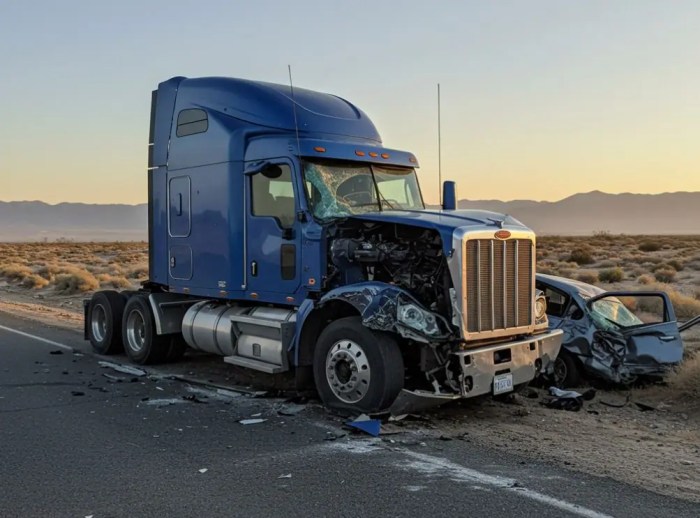
When dealing with vicarious liability cases involving logistics companies and big rig accidents, there are several challenges that can arise during the legal process. Additionally, logistics companies may deploy various defenses to counter vicarious liability claims. Understanding these challenges and defenses is crucial for all parties involved in such cases.
Common Challenges Faced in Proving Vicarious Liability
- Difficulty in establishing the scope of employment: One of the main challenges is proving that the negligent party was acting within the scope of their employment at the time of the accident.
- Lack of direct evidence: In some cases, there may be a lack of direct evidence linking the actions of the employee to the employer, making it harder to establish vicarious liability.
- Complexity in determining control: It can be challenging to determine the level of control the employer had over the actions of the employee, especially in cases involving independent contractors.
Potential Defenses Employed by Logistics Companies
- Independent contractor defense: Logistics companies may argue that the negligent party involved in the accident was an independent contractor rather than an employee, thereby attempting to distance themselves from vicarious liability.
- Lack of agency relationship: Companies may claim that there was no agency relationship between the employer and the negligent party, making it difficult to establish vicarious liability.
- Contributory negligence: Another defense strategy is to assert that the injured party contributed to the accident in some way, thereby reducing the employer’s liability.
Impact of Independent Contractors Versus Employees on Vicarious Liability Cases
- Distinguishing between independent contractors and employees is crucial in vicarious liability cases. Employers have more control over employees, making it easier to establish vicarious liability in such cases.
- On the other hand, independent contractors operate with more autonomy, which can complicate the determination of vicarious liability. Courts will consider various factors, such as the level of control exerted by the employer, to determine the nature of the relationship.
Conclusive Thoughts
In conclusion, the complexities of vicarious liability in the realm of big rig accidents highlight the importance of legal expertise when navigating such cases. By understanding the nuances of proving vicarious liability for logistics companies, legal professionals can effectively advocate for the rights of victims and hold accountable those responsible for preventable accidents.
FAQ Guide
What is vicarious liability?
Vicarious liability holds companies responsible for the actions of their employees, even if the company itself did not directly cause the harm.
How does vicarious liability apply to logistics companies?
Logistics companies can be held vicariously liable for accidents caused by their employees while performing work duties.
What are common challenges in proving vicarious liability?
Challenges include establishing an agency relationship and overcoming potential defenses raised by logistics companies.
How does the distinction between independent contractors and employees impact vicarious liability cases?
The classification of drivers as independent contractors or employees can significantly affect vicarious liability claims and defenses.

